
Presence Is Not Passive
A Growth Guide for Fathers on Active Leadership at Home

What does it actually mean to be present with your family?
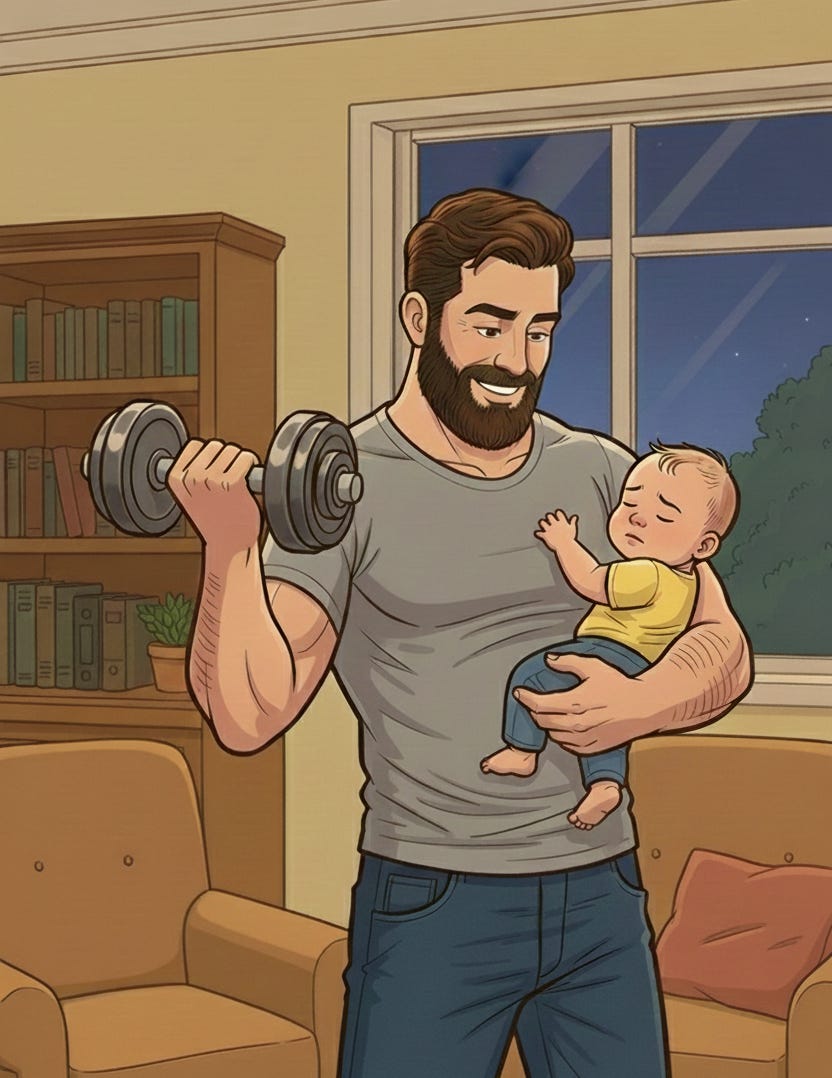
Not the polished version you see online. Not the slow-motion clips or quiet morning routines that conveniently leave out the mess. The real version. The one where you are folding laundry, answering a work message, trying to squeeze in a short workout, and stopping a toddler from eating something they found behind the couch.
Most fathers feel pulled in two directions. You want to show up fully for your kids, but you also want to make progress on the things that matter to you. Your work. Your health. Your future. Your sense of purpose.
The tension comes from believing those two things are in conflict.
They are not. But they do require a different approach than most advice suggests.
The Trap of Doing More
The common assumption is that the answer is doing more.
More productivity. More discipline. More structure. More optimization.
It rarely works.
Some dads live by a tight to-do list. Every hour planned. Every task tracked. They are productive, reliable, and quietly frustrated because the list never ends. No matter how much they accomplish, it never feels complete.
Other dads drift through their days with good intentions and no structure. They want to improve, but they are always waiting for the right time to start. Tomorrow becomes next week. Next week becomes next year. They feel behind without knowing where to begin.
Oddly enough, both types end up feeling the same way.
One is exhausted.
The other feels stuck.
Most productivity advice pushes you toward one extreme or the other. Grind harder or let go completely. Neither works well in real life, and neither works well in fatherhood.
What actually works is the middle.
A small set of priorities that fit inside a real day.
Not an ideal day. A real one.
Presence Requires Structure
Presence is often framed as something soft. Passive. Something you “fall into” if you just slow down enough.
That is misleading.
Presence requires structure.
Without structure, presence turns into distraction. You are physically there, but mentally elsewhere. Half-listening. Half-working. Always split between what you are doing and what you think you should be doing instead.
Structure gives presence somewhere to land.
For me, that structure usually looks like a few simple anchors:
Move my body
Do my job well
Make progress on one personal project
Keep the house running
Spend time with my family
Do something genuinely enjoyable
That is it.
No complicated systems. No color-coded calendars. Just a short list that reflects the life I am actually living.
Some days, those anchors get filled generously. Focused work. Solid training. Quality family time.
Other days, they are met in smaller ways. A short walk. One meaningful task completed. A conversation instead of an activity.
That is not failure. That is adaptability.
Fatherhood does not reward perfect execution. It rewards consistency under imperfect conditions.
Adaptability Is the Skill That Matters
Life with kids does not respect your plans.
Schedules shift. Energy fluctuates. The house gets louder. Time compresses.
You can respond to that reality in two ways.
You can fight it, or you can adapt to it.
Adaptability is not lowering your standards. It is adjusting your methods while keeping your values intact.
You still care about your health, but you stop insisting it has to look a certain way.
You still care about your work, but you stop demanding uninterrupted hours that no longer exist.
You still care about growth, but you accept that it happens in smaller increments for a while.
This shift is where many dads get stuck.
They mistake adaptation for quitting.
It is not.
Adaptation is how growth continues when conditions change.
Why To-Do Lists Break Down
To-do lists are not bad. They are just incomplete.
They are good at capturing tasks. They are terrible at capturing priorities.
A list does not know which items matter most. It does not know when your energy is low or when your family needs more of you. It does not adjust when life intervenes.
When dads rely exclusively on lists, one of two things happens.
Either the list grows faster than it can be completed, or it becomes a source of guilt.
Neither leads to presence.
The solution is not abandoning lists. It is shrinking them.
Instead of asking, “What can I get done today?” ask, “What actually matters today?”
That single question changes the tone of the day.
Presence Is a Choice, Not a Mood
Presence is not something you wait to feel.
It is something you decide.
You decide to close the laptop when it is time.
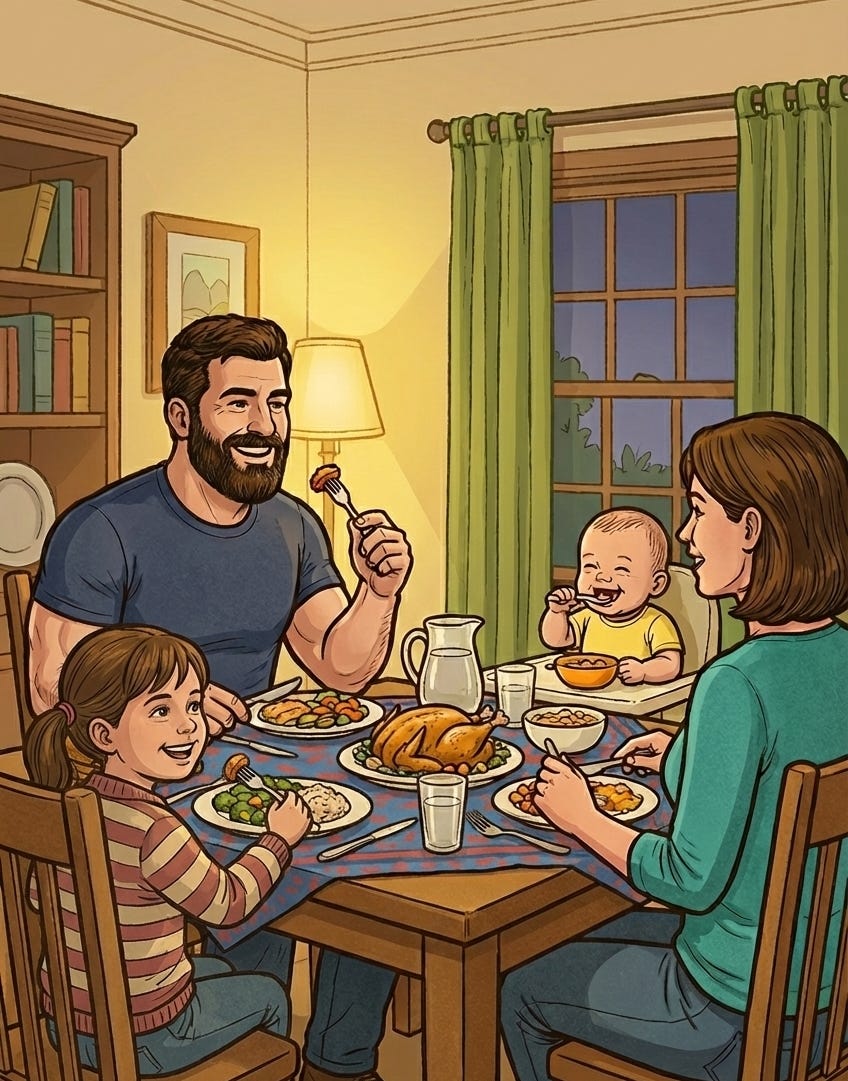
You decide to put the phone down during dinner.
You decide that a small win counts as a win.
These are not dramatic choices. They are quiet ones. Repeated often.
Presence shows up in how you transition between roles.
Work to home.
Task to family.
Effort to rest.
Most dads struggle not because they are lazy or unmotivated, but because they never fully arrive anywhere.
They are always halfway to the next thing.
Presence means finishing the moment you are in before moving on.
What This Looks Like in Practice
In practice, this approach looks ordinary.
It looks like choosing one meaningful task instead of five shallow ones.
It looks like ending the day with energy left for the people who matter most.
It looks like letting go of the pressure to “maximize” every hour.
It also looks like being honest about limits.
You do not need to win every day.
You do not need to improve every metric at once.
You do not need to prove anything to anyone watching from the outside.
You need to stay engaged in your own life.
How to Apply It This Week
This guide only works if it changes how you move through the next few days.
Here is how to apply it immediately.
1. Choose Your Anchors
Write down five to six anchors that matter in this season of life. Not goals. Anchors. These should reflect reality, not aspiration.
2. Limit the Daily Targets
Each day, pick one anchor to prioritize. If everything is important, nothing is.
3. Shrink the Definition of Success
Decide in advance what “enough” looks like. Ten minutes counts. One task counts. Showing up counts.
4. Protect Transitions
Create a buffer between work and family, even if it is brief. A walk. A pause. A reset. This is where presence is often lost.
5. Review Without Judgment
At the end of the week, look back without scoring yourself. Ask what worked, what didn’t, and what needs to change.
That is it.
No overhaul. No reinvention.
Just a steady return to what matters.
A Final Thought
Fatherhood is not a productivity problem to solve.
It is a responsibility to grow into.
You do not become more present by doing more. You become more present by choosing better and letting go of the rest.
Presence is not passive.
It is built deliberately, one ordinary decision at a time.