
Tradition Requires Intention
A Growth Guide for Fathers on Building Meaningful Family Traditions

Most families don’t intentionally create traditions. They inherit them.
They repeat what they grew up with. They default to whatever is easiest. They drift into routines shaped by work schedules, school calendars, and whatever expectations happen to be loudest at the time.
The problem is that traditions don’t form automatically in a meaningful way. If no one defines them, they get defined by convenience, stress, and outside noise.
That’s why tradition is not nostalgia. It’s leadership.
As a father, whether you realize it or not, you are setting the emotional and cultural baseline for your household. Not through speeches or rules, but through what happens consistently. What gets protected. What gets repeated. What gets prioritized even when life is busy.
Traditions are how values stop being abstract and start becoming lived experience.
Traditions Matter More Than We Admit
Children don’t remember explanations. They remember patterns.
They remember how mornings felt. They remember whether dinner was rushed or unrushed. They remember whether home felt calm or chaotic. They remember whether holidays felt grounded or frantic.
Traditions give structure to time. They turn days into seasons and seasons into memories. More importantly, they create predictability in a world that feels increasingly unstable.
For a child, predictability equals safety.
For a family, predictability creates identity.
This is especially important today. Many of the systems that used to provide structure and meaning are weaker than they used to be. Extended families are spread out. Work bleeds into home. Screens fill silence. Nothing slows things down unless someone chooses to.
That “someone” is usually the father.
Not because fathers are more important than mothers, but because leadership requires someone to decide what matters and then defend it quietly and consistently.
Traditions Are Lost Through Neglect
Very few fathers decide not to build traditions. They just assume it will happen naturally.
They tell themselves they’ll get to it later. When work slows down. When the kids are older. When life feels more settled.
Later rarely comes.
What actually happens is that habits form by default. Evenings get eaten by phones. Meals get scattered. Holidays get louder and busier every year until no one remembers what they were supposed to be about in the first place.
That’s how families end up busy but disconnected.
Traditions are not something you add once life gets calm. They’re what create calm in the first place.
Traditions Don’t Have to Be Grand to Be Powerful
One of the biggest mistakes men make is thinking traditions have to be big, expensive, or cinematic.
They don’t.
Some of the most formative traditions are quiet and repetitive.
A consistent dinner at the table where phones are not welcome.
A walk after dinner a few nights a week.
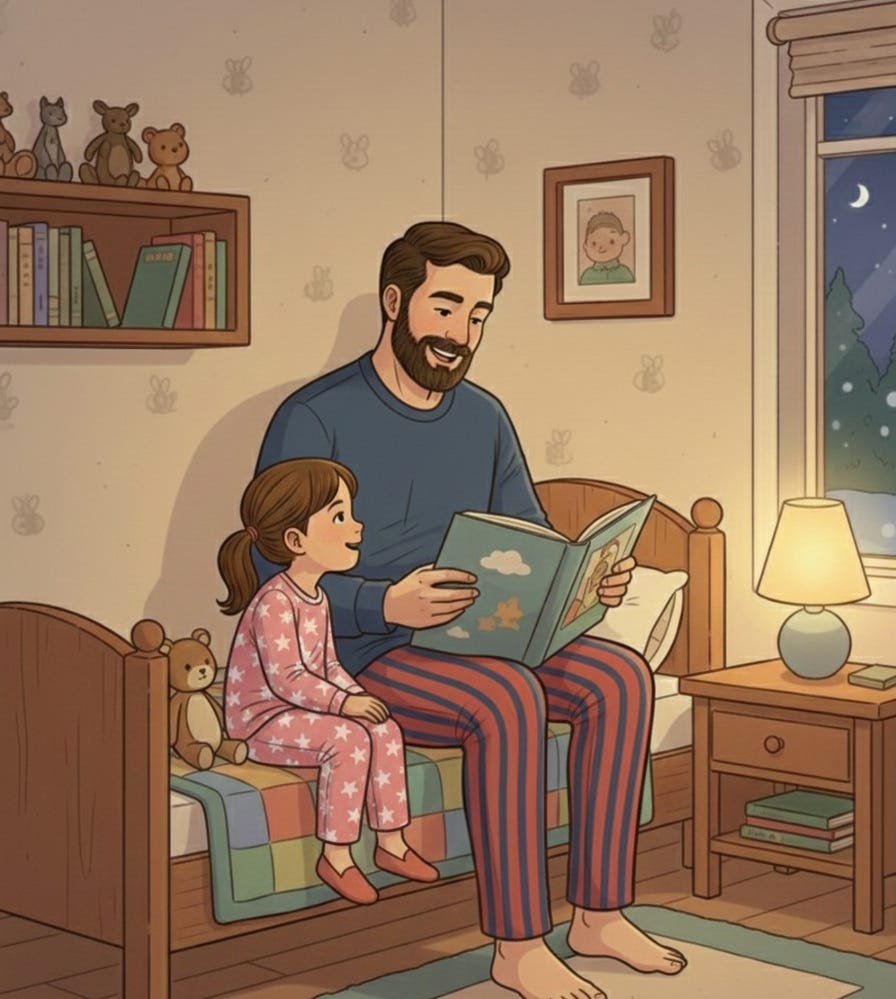
A predictable bedtime rhythm.
A slow morning routine that doesn’t start with a screen.
From the outside, those things look boring. From the inside, they build rhythm, trust, and connection.
They teach children that attention is normal. That conversation matters. That home is a place where people are present.
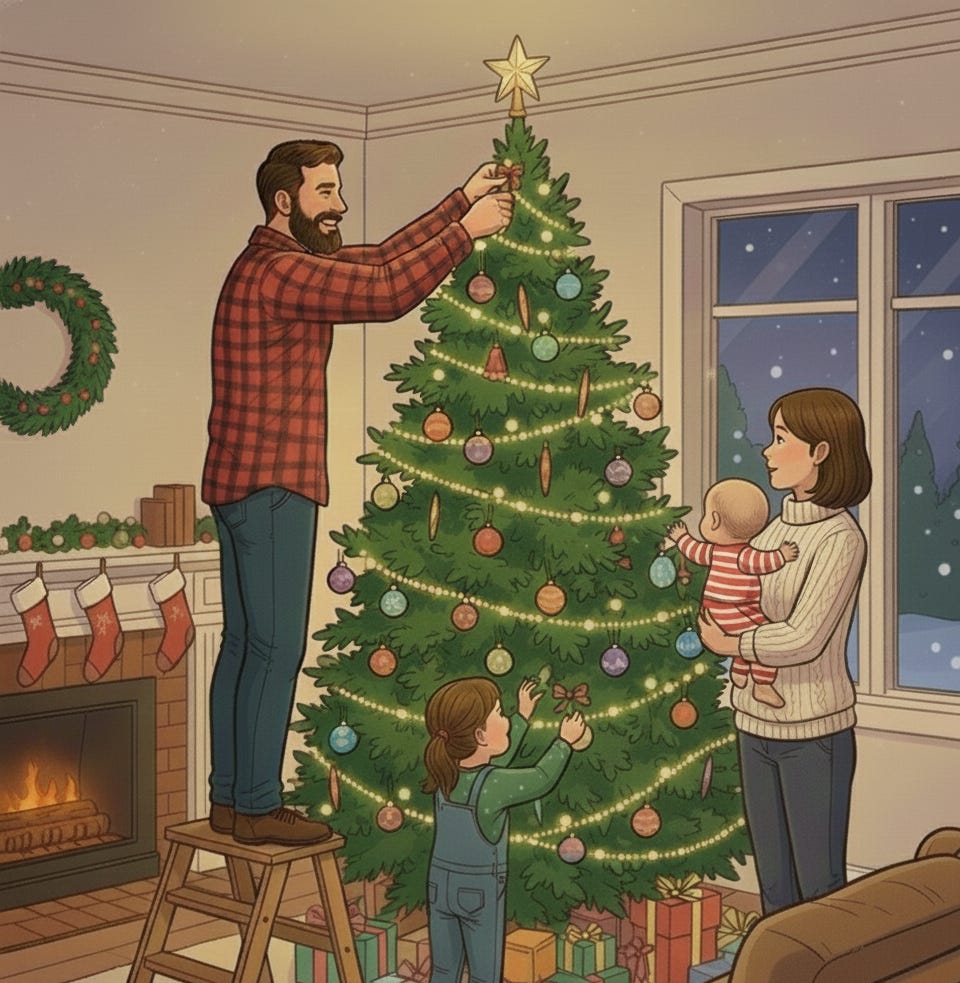
Even holidays work the same way. A season like Christmas doesn’t have to be packed to feel meaningful. In fact, it often becomes more meaningful when fewer things are protected more intentionally.
A calmer morning. A shared meal. A repeated ritual that signals, “This is who we are.”
That repetition is the point.
Leadership Is Choosing What to Keep and What to Cut
Creating traditions isn’t just about adding things. It’s also about removing them.
Some patterns are worth preserving because they ground your family. Others are worth letting go because they add stress without adding meaning.
A father who leads well in this area asks simple but uncomfortable questions:
What actually brings us together?
What drains us every year but somehow keeps returning?
What do I want my children to associate with home? With holidays? With family time?
Those questions don’t require perfect answers. They require attention.
Christmas tends to expose this more than most seasons. It amplifies everything. It can become frantic and performative, or steady and meaningful. The difference usually comes down to whether someone has decided what the season represents inside their home.
Wanting quieter mornings or fewer obligations isn’t indulgent. It’s intentional. It’s leadership.
Traditions Are How Values Become Visible
You can tell your children that family matters.
Or you can eat together.
You can say faith is important.
Or you can show up to church consistently.
You can talk about presence.
Or you can put the phone down at the same time every night.
Traditions are values with muscle memory.
They don’t rely on motivation. They rely on repetition.
And over time, they shape how your children understand adulthood, responsibility, and connection. Long after they forget what you said, they will remember what was normal.
How to Apply It This Week
Here’s how to approach this without overcomplicating it.
1. Take Inventory
List the rhythms your family already has. Not the ones you want. The ones that actually exist.
How do mornings look?
How do evenings end?
How do weekends feel?
How do holidays usually unfold?
Don’t judge yet. Just notice.
2. Identify One Anchor
Choose one small, repeatable practice that anchors your family. Something realistic that can survive busy weeks.
Examples:
A protected family dinner
A consistent evening routine
A weekly walk or shared activity
A screen-free window each day
Small is better than ambitious.
3. Decide What You’re Willing to Defend
Every tradition costs something. Time. Energy. Convenience.
Decide what you’re willing to protect even when it’s inconvenient. If everything is negotiable, nothing becomes tradition.
4. Lead Quietly and Consistently
You don’t need buy-in speeches. You need consistency.
Show up the same way. Set the tone. Adjust when needed, but don’t abandon the structure the moment it feels inconvenient.
5. Revisit Once a Year
Traditions should evolve with seasons of life. What worked when your kids were toddlers may not work when they’re older.
Revisit, refine, keep what serves your family now.
A Final Thought
Traditions don’t magically appear in strong families. They’re built.
They’re built by fathers who decide that meaning matters more than momentum. That presence is worth protecting. That the culture inside their home deserves just as much attention as the work outside of it.
You don’t need more events. You need more intention.
That’s how strong families are shaped.
Love this!